The fashion industry is often viewed through a lens of effortless glamour. We see the final product of the glossy magazine cover, the six-minute runway spectacular, or the viral social media campaign, and assume the participants were simply born with the ability to captivate a lens.
However, the reality of fashion model training is far more demanding than the public eye perceives. It is a highly specialized discipline that blends athletic precision, psychological endurance, and business acumen. To succeed in the contemporary market, a model must undergo a transformation from a person with potential to a professional tool capable of selling a lifestyle, a garment, and a brand.
Runway Training
The runway is the most iconic stage for a fashion model, yet the walk is one of the most difficult skills to master. In professional training, the walk is broken down into its mechanical components. It begins with the core.
A model walks from the center, not the legs. Training involves hours of posture correction, ensuring the spine is elongated, the shoulders are rolled back and down, and the chin is perfectly parallel to the floor.
Models must learn the T-Walk, a specific choreography that dictates how they enter the stage, how they pause at the pit, which is the area where photographers are clustered, and how they pivot to return.
Timing is everything. Training includes walking to various tempos, from the rapid-fire beat of high-street fashion shows to the slow, ethereal glide required for Haute Couture.
Furthermore, footwear mastery is a non-negotiable skill. A trainee must be able to navigate a slick runway in 15cm heels, heavy avant-garde boots, or even oversized garments that restrict movement, all while maintaining a facial expression of total serenity.
Editorial Posing and Movement
If the runway is about movement, editorial work is about the still. However, a still image is rarely static. Professional fashion model training teaches fluid posing, which is the art of moving continuously while a photographer clicks the shutter.
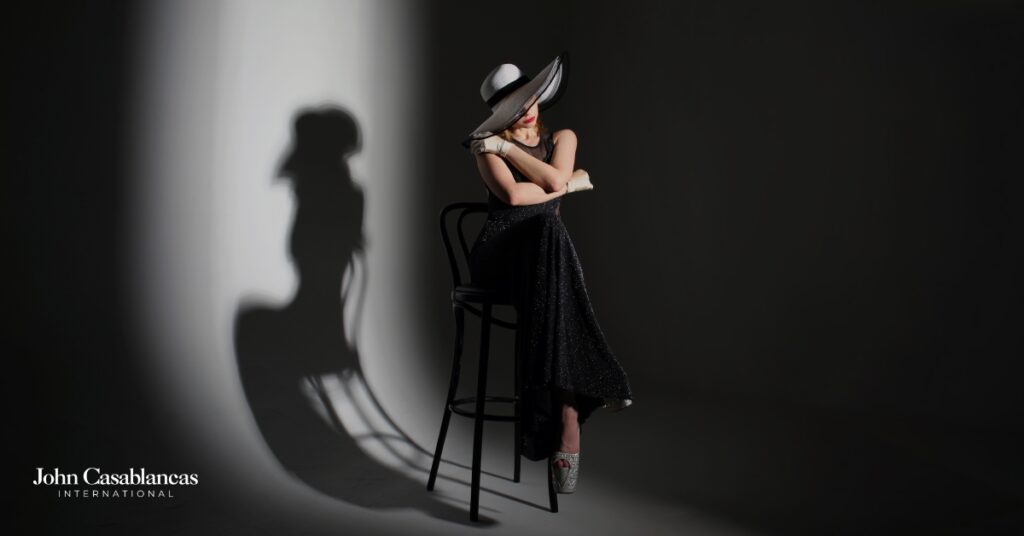
This requires a deep understanding of light and shadow. A model is trained to feel where the key light is hitting their face and to adjust their angles by millimeters to highlight their bone structure.
Posing also involves a sophisticated knowledge of geometry. Trainees learn how to create negative space with their bodies, angles created by a bent elbow or a cocked hip that make an image more visually arresting.
They are taught to interact with the clothing. For example, if a dress has a specific flow, the model must know how to kick the fabric or catch the air to showcase the designer’s intent. This is where micro-expressions come into play. A model may be asked to give fifty different looks in sixty seconds, ranging from disdainful elegance to youthful joy, without ever losing the intensity in their eyes.
Grooming and Wellness
In fashion model training, the body is treated as a professional instrument. This is about reliability as much as it is about aesthetics. Models are educated on skincare regimens that keep their skin a blank canvas for makeup artists. They learn the industry standard for hair care, often being advised to avoid drastic changes so they remain bookable for clients who saw their previous portfolio.
Nutrition and fitness training are also central pillars. Unlike traditional gym routines aimed at mass, model fitness focuses on lean muscle, flexibility, and endurance. Yoga and Pilates are frequently recommended to improve the mind-body connection necessary for complex posing. Training also covers the survival kit of essential items a model must carry to every job, including nude undergarments, basic makeup, and high-protein snacks to sustain energy during 12-hour shoot days.
The Business of Modeling
One of the most significant shifts in modern fashion model training is the emphasis on business. A model is an independent contractor, essentially a small business owner. Agencies train their talent on Book Management, which is the process of curating a portfolio that shows range. A model might need a commercial look for catalogs and a high-fashion look for magazines, and balancing these two is a strategic art.
In the digital era, social media training has become mandatory. Models are taught how to build a personal brand on platforms like Instagram and TikTok, as many casting directors now check social reach before hiring. This includes training in photography, lighting for digitals, and public speaking. A model who can articulate a brand’s values during an interview is significantly more valuable than one who cannot.
Psychological Resilience
The hidden side of fashion model training is the preparation for the psychological toll of the industry. The level of rejection in modeling is unparalleled. Trainees are taught that rejection is rarely personal. Instead, it is often a matter of a brand looking for a specific type or aesthetic that the model doesn’t fit that day. Developing a thick skin is a primary training objective.
Furthermore, models are trained in set etiquette. They must remain professional and energetic regardless of the conditions, whether they are shooting summer clothes in the middle of winter or standing for six hours during a fitting. Mental stamina, patience, and the ability to take direction, and sometimes criticism, from creative directors are the traits that separate a flash-in-the-pan face from a long-term career professional.
Elevate Your Career With John Casablancas International
Ultimately, fashion model training is the process of turning raw potential into a professional chameleon. While the world sees only the final, polished image, industry leaders know that success is built on hundreds of hours of practice and a relentless pursuit of perfection.
If you are ready to bridge the gap between aspiring and professional, John Casablancas International offers the world-class guidance needed to navigate this competitive landscape. By providing industry-standard training and global networking opportunities, we empower the next generation of talent to master the runway, the camera, and the business of fashion.
Rebecca Lord is the Chief Marketing Officer at John Casablancas Modeling and Career Centers, where she leads strategic marketing to grow brand visibility. With over a decade in copywriting, social media, and ROI-driven campaigns – plus 14 years as a freelance copywriter and designer – she specializes in messaging that resonates and delivers results. She’s based in Greater St. Louis.