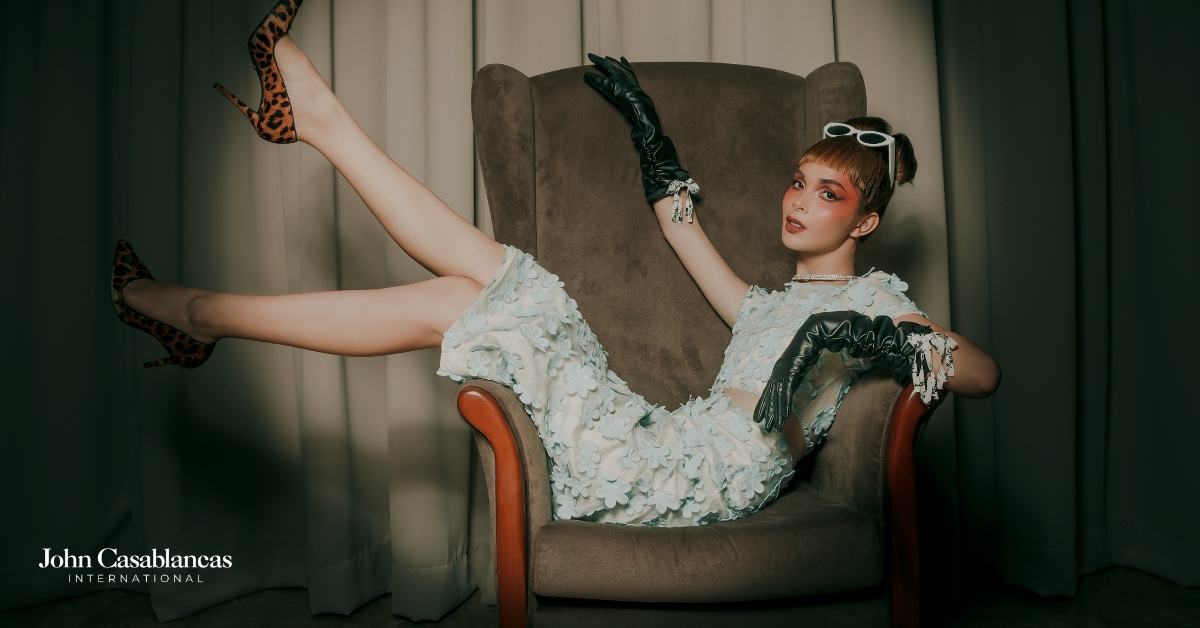
High-fashion editorial posing is a demanding discipline that elevates modeling from wearing clothes to embodying a narrative. Unlike commercial photography, which aims to sell a specific product with clear, often happy, expressions, editorial work demands a model to become a living piece of art.
For models aspiring to grace the pages of Vogue, W, or Harper’s Bazaar, mastering this unique style of posing is non-negotiable. It requires an understanding of body geometry, emotional nuance, and the collaborative vision of the creative team.
The Editorial Mindset
The fundamental difference in editorial posing lies in its intent: storytelling over selling. Your body and face must communicate a narrative, even if it’s a subtle or ambiguous one.
Before a single frame is shot, you must internalize the editorial’s theme, which could range from futuristic dystopia to romantic melancholy. Every movement, every expression, must serve this overarching concept. The best editorial models are able to inhabit a character or an emotion, and not just strike a pose.
In high fashion, expressions are often intense, subtle, or even detached, rarely featuring a conventional, cheerful smile. Master the art of the “dead-eyed” stare or the thoughtful, far-off gaze. This conveys a depth and aloofness that is a hallmark of high fashion.
Your eyes are the most powerful tools for communication. Learn when to engage in powerful, direct eye contact and when to turn your head just enough so that you are looking off-camera, adding a sense of mystery or candidness.
Master Body Geometry
High fashion relies on the body’s ability to create interesting shapes and dynamic lines within the photographic frame. This often means embracing poses that feel unnatural in real life. Since the human eye is drawn to geometric shapes, models use their bodies to create them.
Use your limbs to create triangles, which add visual interest and dimension. The classic “hands on hips” creates a strong triangle under the arms. Try bending an elbow and a knee, or keeping an arm separated from your torso to form an open angle.
The S-curve (Contrapposto) is a classical technique that involves shifting your weight entirely onto one leg, allowing the opposite hip to pop slightly outward. This creates a natural, elegant S-shape that is inherently flattering and dynamic.
Be acutely aware of the space around your body. Posing with a limb extended or slightly away from the torso creates pockets of negative space, which enhances the graphic quality of the pose and highlights the body’s shape.
High-fashion also often favors an angular, elongated look, so don’t be afraid of “breaking” your limbs or contorting your body slightly. Editorial work is where the unnatural poses, such as the exaggerated lean, hunched shoulders, or sharp bends at the elbow, are celebrated for their abstract and graphic quality.
Incorporating Movement and Fluidity
Static poses quickly become monotonous. The most compelling editorial photos capture a moment in motion or an “in-between” stage of a transition. Editorial posing is best thought of as a dance or a continuous, slow-motion movement, rather than a series of frozen stops.
Move slowly and deliberately from one position to the next. The photographer often captures the most interesting shapes during these transitions or micro-movements (a slight head tilt, a hip swivel, a subtle arch of the back).
Poses should always highlight the features of the clothing. If the dress has movement, use a swirl or a lift. If it’s structured, assume a rigid, architectural pose that emphasizes the garment’s tailoring and lines.
Collaboration and Preparation
A masterful editorial shoot is a collaboration between the model and the creative team. Your preparation and on-set communication are critical to success. Study the magazine or designer for whom you are shooting. Analyze their aesthetic. Create a mood board featuring the type of poses, expressions, and angles that match the shoot’s theme.
Practice a catalog of go-to poses and fluid transitions in front of a mirror. This builds muscle memory, allowing you to quickly shift and hold challenging poses on set.
Identify your best side and how different angles affect your features. Understand that the camera lens and the photographer’s angle will drastically change the look of your pose.
When you’re on set, maintain an open dialogue with the photographer. They see what the lens sees and can guide you with small, yet crucial, adjustments.
Incorporate the props and the environment into your pose. Use a wall for an extreme lean, interact with a piece of furniture, or engage with the background to enhance the visual narrative.
Launch Your Editorial Career With International Experts
Mastering high-fashion editorial posing is the ultimate step in transforming from model to muse. It requires dedicated practice to perfect the abstract shapes, intense expressions, and fluid transitions demanded by top-tier publications.
To fully capitalize on these skills, professional guidance is essential. John Casablancas International is a leading name in talent development, offering the industry connections and training necessary to translate your mastery of editorial pose into a successful, global modeling career.
Connect with John Casablancas International today to take your high-fashion aspirations from the mood board to the runway.