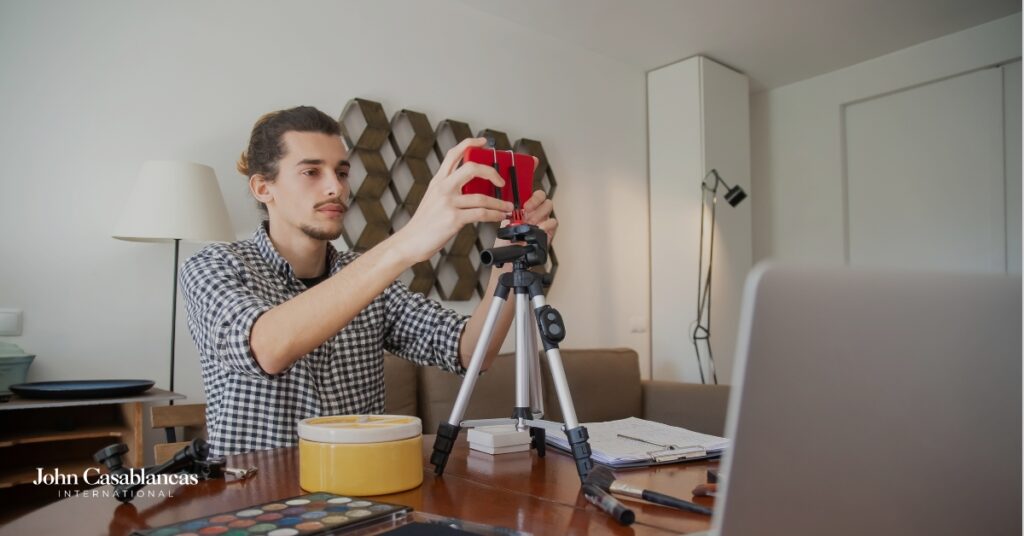
The influencer marketing landscape these days bears little resemblance to the wild west era of a decade ago. What was once a market driven by vanity metrics such as likes, follows, and filtered aesthetics has matured into a sophisticated, performance-oriented $32 billion economy. As brands navigate a digital world increasingly saturated by AI-generated content, the value of human connection has become the ultimate currency.
Understanding the Pay Scale
To understand how much influencers make, we have to look past the occasional multi-million dollar celebrity deal and focus on the tiers that define the bulk of the industry. The democratization of influence means that even those with a relatively small audience are carving out significant income streams.
Nano Influencers
A Nano-influencer, typically defined as someone with between 1,000 and 10,000 followers, can expect to earn anywhere from $10 to $200 for a single post on platforms like Instagram or TikTok. While these numbers seem modest, their power lies in hyper-local or hyper-niche engagement. When these creators move to long-form platforms like YouTube, their value increases, with average video rates sitting between $150 and $300 due to the increased production time and searchability of the content.
Micro-Influencers
Moving up the ladder, Micro-influencers (10,000 to 100,000 followers) have become the sweet spot for modern brand campaigns. On short-form social media, a Micro-influencer now commands between $200 and $1,200 per post. However, the real shift is seen on YouTube, where their specialized knowledge allows them to charge between $500 and $5,000 per video. This tier is often the most profitable in terms of effort-to-income ratio, as they maintain high engagement without the massive overhead costs of a full production team.
Mid-Tier
For Mid-Tier creators (100,000 to 500,000 followers), the stakes rise significantly. A single post on Instagram or TikTok can bring in $1,200 to $5,000, while a dedicated YouTube integration often ranges from $5,000 to $10,000. These creators are often professionalized and may employ a part-time editor or manager to handle the volume of brand requests.
Macro-Influencer
Once a creator hits the Macro-influencer level (500,000 to 1 million followers), they are effectively running a mid-sized media company. Their per-post rates on visual platforms sit between $5,000 and $10,000, but their YouTube presence is where the most significant revenue lives, often fetching $10,000 to $20,000 per video.
Mega-Influencer
Finally, the Mega-influencers and Celebrities with over a million followers operate in a different stratosphere. While their base rates start at $10,000 for a simple post, high-profile campaigns regularly reach $1 million or more. On YouTube, these “A-list” creators rarely take on projects for less than $20,000, with top-tier talent commanding six-figure sums for multi-video series.
What Actually Drives Pay?
While follower counts provide a baseline, they are rarely the final word in a contract these days. Brands have become incredibly savvy at identifying the human-led metrics that actually drive sales. Several key factors now dictate whether a creator gets the industry standard or a significant premium.
The Human Premium in an AI World
Perhaps the most fascinating shift is the rise of the human premium. In an era where AI can generate flawless models and perfect scripts, brands are actively seeking out the imperfect. Authenticity is a measurable asset.
Niche Authority and the CPM Gap
The industry has moved toward a quality over quantity approach regarding audience demographics. This is best seen in the disparity between niches. A plumber with 50,000 followers who teaches DIY repair often earns more per post than a lifestyle influencer with 200,000 followers.
Usage Rights and the Content Lifecycle
The influencer contract is as much about where the content lives as it is about who posts it. Usage rights have become a primary driver of income. Roughly two-thirds of all brand deals now include an ad-ready clause. If a brand wants the right to take a creator’s organic video and run it as a paid advertisement for a month, they can expect to pay a whitelisting or usage fee that adds 50% to 100% to the base rate.
The Shift to Hybrid Compensation
The flat fee model is slowly being replaced by performance-based hybrid deals. Brands are increasingly hesitant to pay large sums upfront without guaranteed results. Instead, influencers are seeing contracts that offer a modest base fee to cover production time and creative labor paired with a commission on every sale tracked through an affiliate link or discount code.
The Virality Premium
Finally, platforms like TikTok have changed the math on audience size. Because of the interest-based algorithms that can push content to millions of non-followers, brands are paying a virality premium. If a creator has a consistent track record of hitting the For You page, even with a small follower base, they can charge significantly higher rates. Brands are betting on the potential reach of the content rather than the static reach of the follower count.
Mastering the Market With John Casablancas International
Navigating the creator economy requires a professional edge and a deep understanding of industry standards. As the landscape shifts toward performance-based deals and human-led authenticity, the right training can be the difference between a one-off post and a sustainable career.
John Casablancas International provides aspiring creators with the essential tools to build a competitive personal brand. By focusing on self-confidence and professional networking, John Casablancas International helps influencers bridge the gap between hobbyist and industry pro.

Rebecca Lord is the Chief Marketing Officer at John Casablancas Modeling and Career Centers, where she leads strategic marketing to grow brand visibility. With over a decade in copywriting, social media, and ROI-driven campaigns – plus 14 years as a freelance copywriter and designer – she specializes in messaging that resonates and delivers results. She’s based in Greater St. Louis.