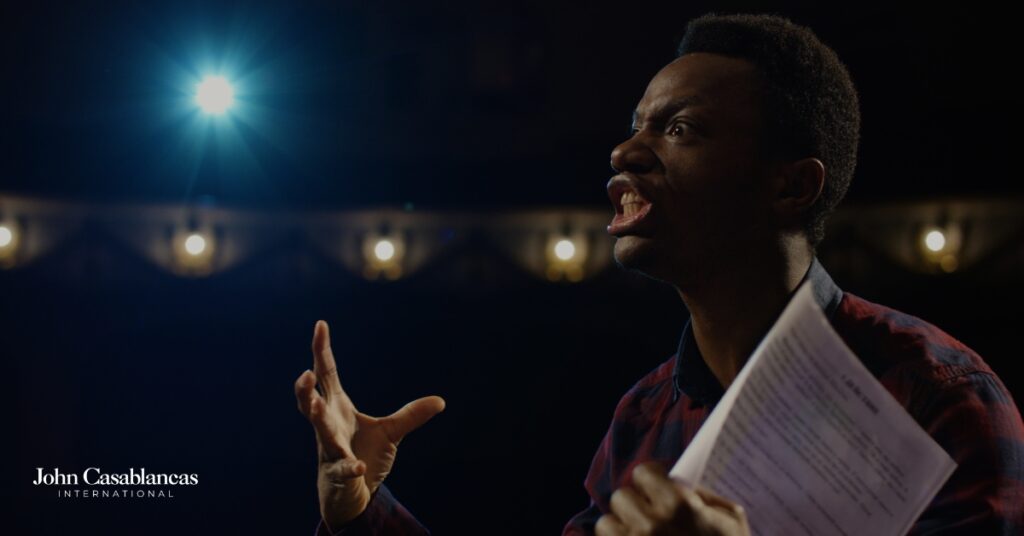
For aspiring actors, the monologue for auditions often feels like a formidable Everest – a solitary peak to conquer, determining whether the gates of opportunity swing open or remain shut. Yet, the audition monologue is, in essence, an actor’s most potent tool. It’s a concentrated burst of performance, showcasing your depth, versatility, and innate understanding of character to casting directors, agents, and industry professionals. For the novice navigating the often-intimidating landscape of auditions, a structured approach to monologues is not just helpful, it’s essential.
What Exactly is a Monologue?
Before diving into selection and delivery, it’s crucial to grasp what a monologue for auditions fundamentally is. Simply put, a monologue is a lengthy speech delivered by a single character within a larger dramatic work – be it a play, film, or television script. It’s a moment where a character speaks uninterrupted, often revealing their innermost thoughts, motivations, or a pivotal moment in their journey.
It’s important to remember that a monologue is not a poem, a song, or an improvised speech. It’s drawn directly from published, intentional dramatic text. While closely related, it also differs from a soliloquy, where a character speaks their thoughts aloud to themselves, often unheard by others on stage. For audition purposes, the distinction can sometimes blur, but the core remains: a solo performance from a written work.
Choosing Your Perfect Piece
The selection of your monologue is perhaps the most critical step, laying the foundation for your entire audition. A well-chosen piece can highlight your strengths; a poorly chosen one can obscure your potential. Always, without exception, choose a monologue from a published play. This ensures the writing is robust, the character has a clear context, and the material is designed for performance. Steer clear of adapting non-theatrical texts or, worse, writing your own, unless explicitly requested for a specific project.
Casting directors operate on tight schedules. Your monologue should be concise – ideally between 60 to 90 seconds, with a strict maximum of two minutes. Avoid the temptation to pick longer pieces; you risk losing their attention before you’ve reached your emotional peak.
Select a monologue for a character whose “playing age” aligns closely with your own. Similarly, consider your “casting type” – the roles you naturally fit based on your appearance, voice, and demeanor. Trying to play significantly older, younger, or a vastly different physical type can come across as unconvincing unless you possess exceptional transformative abilities.
Aim to have at least one classical monologue (from works written before the 20th century, like Shakespeare or Greek tragedy) and one contemporary piece (from the 20th century onwards). This demonstrates versatility and your ability to handle different styles and linguistic structures.
Most auditions will request contrasting pieces – one dramatic, one comedic, or even a ‘serio-comedic’ piece that blends both. This is your opportunity to showcase your emotional range and prove you’re not a “one-note” actor.
A compelling monologue is more than just a recitation of words; it’s a journey. Look for pieces where the character experiences an “arc” – they start in one emotional or intellectual state and arrive at another, having undergone a discovery, shift, or revelation within the monologue itself. Avoid monologues that stay on a single emotional beat throughout; these limit your ability to demonstrate range.
While certain monologues become popular for good reason, performing a piece that every other actor your age is also doing can make it harder to stand out. Research and dig deeper to find something unique that still powerfully speaks to you and your strengths.
Never, ever, perform a monologue without having read the entire play from which it comes. The context of the full play provides invaluable insight into your character’s motivations, relationships, backstory, and the overall themes of the work. Without this foundational understanding, your performance will lack depth and specificity.
Bringing Your Monologue to Life
Once you’ve chosen your monologue, the real work begins. Preparation is where raw talent meets disciplined craft.
Textual Analysis
Deep textual analysis is crucial. Uncover the circumstances: who, where, when, and what just happened. Delve into your character’s desires, fears, and relationships. Define their objective and the tactics they use. Explore the subtext—what’s truly felt—and trace the monologue’s emotional arc. Beyond memorizing words, understand the thoughts and flow of ideas.
Practice, Practice, Practice
Practice extensively, both aloud and physically. Experiment with vocal delivery, pace, and volume, using purposeful movement to enhance your performance within a limited audition space. Prioritize vocal health and clarity, practicing projection and articulation. Develop a clear “moment before” to anchor your performance. If your character speaks to someone, vividly imagine their presence, focusing just above the audience’s heads and reacting to your imagined partner.
Delivering Your Monologue
The audition room is a unique space. Your preparation will shine brightest when coupled with confident, professional delivery. Enter the room confidently. Be polite, introduce yourself clearly, and state your monologue titles (and play if different from the character). Always arrive with your voice and body warmed up.
This ensures you’re ready to perform at your best from the first word. Once you begin, immerse yourself in the character and the moment. Do not break character to look at the auditors for approval. Stay connected to your objective. If you stumble on a line or forget a word, do not break character. Do not apologize. Simply pick up where you left off and keep going.
Take the Next Step with John Casablancas International
Mastering monologues is a powerful stride in your acting journey. For aspiring performers seeking structured guidance and comprehensive training to refine their craft, John Casablancas International offers programs designed to build confidence and hone essential skills.
Their expert instructors can provide personalized feedback on your monologue delivery, helping you understand character depth, emotional arcs, and stage presence. Elevate your audition game and confidently step into the spotlight with their professional development opportunities.