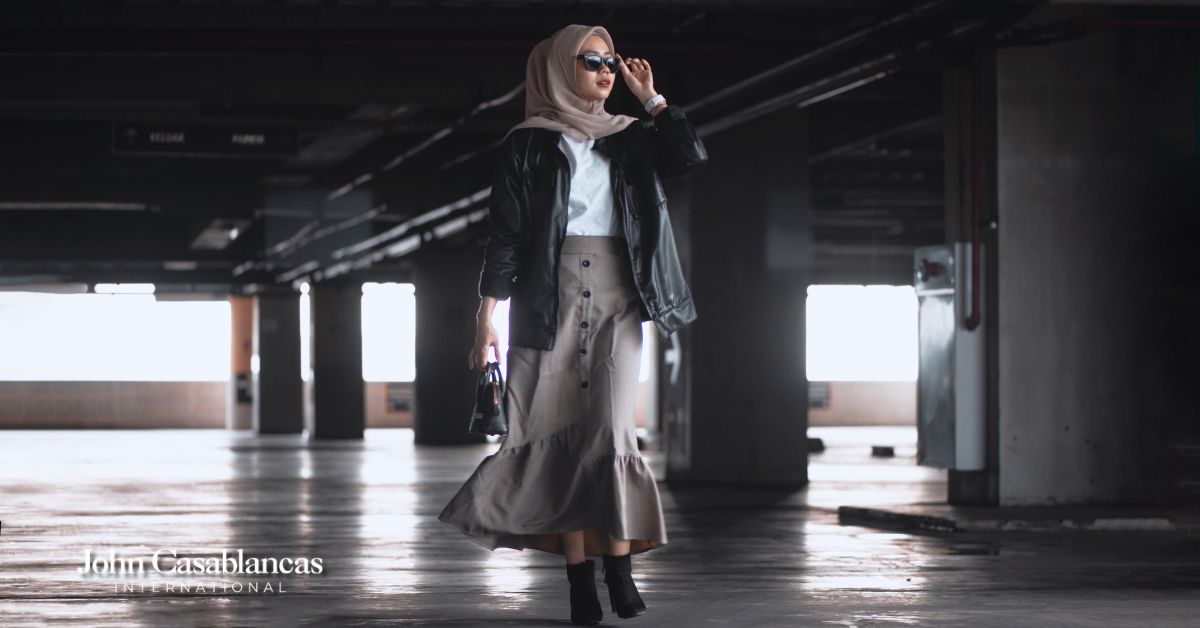
Learning how to walk like a model is more about disciplined practice and correct technique than natural talent. A professional model walk is rooted in posture, timing, and controlled movement, not exaggerated gestures or forced “attitude.”
With structured training from John Casablancas International, you can develop a confident, polished walk that meets agency and casting standards.
Why Learning To Walk Like a Model Is Worth It
Many people assume that only “gifted” or unusually tall individuals can pull off a model walk. In reality, agencies and casting directors evaluate how well you carry yourself, not just your height or weight. A strong walk is a key part of that.
Investing time in learning how to walk like a model pays off in several ways:
- Better posture and body awareness – Good posture reduces strain on your spine and joints, making your walk look more natural and confident.
- Greater casting confidence – When you know what you are doing, you feel more comfortable walking across a room in front of strangers.
- Easier transitions between posing and walking – Photo shoots and runway appearances require seamless movement; a solid walk helps you move smoothly between poses.
- Stronger on‑camera presence – Even in static shots, how you stand and glide into position affects how you read on camera.
For beginners, the goal is not to look exactly like a top‑tier runway model on day one. The goal is to build repeatable habits that move you closer to that standard over time.
Does learning the model walk really improve casting confidence?
Yes. When you understand how to walk with correct posture and steady timing, you feel less unsure about your movements in casting rooms. That confidence shows in how you stand, walk, and interact with others. As you repeat the correct technique, your walk becomes more automatic and less stressful.
How does a strong walk help with photoshoots?
A strong walk helps you transition smoothly between poses and positions during photoshoots. Instead of stiff or awkward steps, you can move with control and purpose, which photographers appreciate. This seamless movement also lets you focus on your expression and styling, not on how your feet land.
Is it worth learning the model walk if I am not sure about modeling?
Yes. The skills you learn—posture, balance, and controlled movement—benefit many areas of life, including public speaking and interviews. Even if modeling does not become your main focus, you gain more body awareness and confidence. Many people start with curiosity and later discover new opportunities through that training.
Benefits That Matter to New Models
Understanding the concrete benefits of a good model walk can help you stay motivated when progress feels slow.
1. Professional posture and alignment
A model walk relies on vertical alignment: head stacked over shoulders, shoulders over hips, and feet grounded evenly. This alignment helps you:
- Stand taller without strain.
- Move more efficiently.
- Avoid fatigue during long casting calls or photoshoots.
A posture that looks bored or lazy in normal life becomes polished and controlled when framed as a model walk.
2. Increased confidence in casting situations
Walk‑ins and open calls can feel intimidating. When you know how to walk like a model, you spend less mental energy worrying about your movements and more energy presenting yourself. Confidence is not loud or exaggerated; it is steady eye contact, clean posture, and a controlled pace.
3. Smoother photoshoot movement
Photoshoots often require you to move into position, turn, and pause repeatedly. When your basic walk is consistent, combined poses and turns become easier to execute and remember. You can focus on expression and styling instead of worrying about your footing.
4. Stronger runway and on‑camera presence
Runway and commercial work demand a different level of control because every step is visible. A well‑trained walk helps you:
- Maintain even timing.
- Stay centered and grounded.
- Look composed even when you are nervous.
For many students, the first visible improvement comes in how they feel, not how they look. That internal shift often shows up in photos and videos long before dramatic external changes.
Why is confidence important when you learn to walk like a model?
Confidence comes from knowing your technique works, not from pretending. When you understand how to walk with control and steady pacing, you feel more comfortable in casting rooms and in front of photographers. That calm presence makes you look more professional and memorable to casting directors.
What is the difference between a casual walk and a model walk?
A casual walk is often relaxed and sometimes uneven, while a model walk is controlled, aligned, and consistent. A model walk keeps your head, shoulders, hips, and feet stacked in a straight line as you move. This small difference in technique makes your movement look intentional and polished on camera.
What Goes Into a Real Model Walk
To understand how to walk like a model, it helps to break the walk into smaller components. Each piece—posture, stride, timing, and upper‑body control—contributes to the whole.
1. Core posture and body alignment
Your posture is the foundation of your walk. Think of it as the frame on which everything else is built.
Key points to focus on:
- Head position – Keep your head upright, chin slightly down, and gaze aligned with your spine. Avoid looking down at your feet or tilting your head too far back.
- Shoulders – Roll them back and relax them rather than pulling them up toward your ears. Tension in the shoulders makes your walk look stiff.
- Spine and core – Aim for a neutral, not over‑arched or slouched, spine. A light engagement of your core helps support your posture without making your body rigid.
- Hips and pelvis – Keep your pelvis neutral; avoid sticking your hips out or tucking them too far under. This keeps your center of gravity stable.
- Feet and weight distribution – Distribute your weight evenly across both feet. Avoid leaning too far forward or back, which can make your walk look unbalanced.
Practice this alignment while standing still, then slowly add movement. Even a few minutes of focused posture work each day can retrain your body’s default stance.
2. Steps, stride, and timing
Once your posture is stable, the next step is to learn how to step forward with control.
Key elements of a model stride:
- Heel‑toe roll – Start with the heel, roll through the arch, and finish on the ball of the foot. This creates a smooth, continuous motion rather than a jerky step.
- Stride length – Keep your steps controlled but not tiny. Avoid over‑reaching, which can make your walk look awkward or forced.
- Pace and rhythm – Aim for an even, steady pace. Rushing makes you look nervous, while dragging can appear bored.
- Breath and relaxation – Sync your breathing with your steps. Inhale as you prepare to move, exhale as you step. This helps keep tension out of your shoulders and neck.
In class, instructors often slow students down to half speed so they can feel each part of the step. Over time, you can gradually increase your pace while keeping the same clean mechanics.
3. Upper body control and eye line
Upper‑body control is what separates a casual walk from a model walk.
Important points:
- Shoulders and arms – Keep your shoulders relaxed and level. Let your arms move naturally with a slight bend at the elbow, avoiding exaggerated swings.
- Chest and torso – Keep your chest open without puffing it out. This creates a natural, confident look without stiffness.
- Eye line – Keep your gaze steady and forward. On camera, your eye line may shift slightly depending on the shot, but the goal is always a focused, composed expression.
In photoshoots, subtle upper‑body adjustments can change how dynamic your movement appears. Training helps you make these adjustments instinctively.
How John Casablancas International Teaches the Model Walk
John Casablancas International has been a recognized name in modeling education since 1976. Over the years, the focus has remained the same: turning interested individuals into polished, professional‑ready talent through structured instruction and personalized attention.
Our approach to teaching the model walk is systematic, not random. Instructors begin with your current ability, then guide you through specific drills and corrections that build over time.
Features and components of our training
- Initial posture and walk assessment
Before you start, an instructor evaluates your current walk, pointing out strengths and areas that need adjustment. This assessment becomes your baseline for tracking progress. - Video analysis and feedback
Short video clips of your walk are recorded and reviewed together. Instructors highlight specific moments—such as uneven shoulders or a collapsed arch—and show you how to correct them using simple cues. - Controlled drills and repetition
You practice small, repeatable movements such as walking in place, heel‑toe rolls, and short walks along a line. Repetition builds muscle memory so your correct posture becomes automatic over time. - Runway and on‑camera application
As you progress, drills move into more realistic settings. You practice walking across a room as if you were on a runway or moving into position for a photoshoot. - Guided practice outside class
Students receive clear, simple exercises they can repeat at home. These exercises reinforce what they learn in class and help them track improvements between sessions.
Class structure and format
To accommodate different experience levels and schedules, John Casablancas International offers structured programs with multiple entry points.
- Beginner modeling classes
Designed for people with no prior modeling experience, these classes focus on posture, basic walk mechanics, and introductory posing. The environment is low‑pressure and supportive, with an emphasis on learning fundamentals. - Intermediate and advanced workshops
As students become more comfortable, they can move into more demanding sessions that focus on:- Runway timing and pacing.
- Advanced posture refinement.
- Camera presence and expression.
- Flexible scheduling
Classes are scheduled to fit around school, work, and other commitments. Many locations offer evening or weekend options so adults and students can train without major disruptions to their routines. - Small group coaching
To ensure each student receives sufficient attention, class sizes are kept relatively small. This allows instructors to provide individualized feedback instead of generic group instructions.
5 Steps To Start Walking Like a Model
You do not need a dramatic overhaul to start learning how to walk like a model. A simple, repeatable process can bring noticeable improvement in just a few weeks.
Step 1: Assess your current walk
Begin by recording yourself walking naturally across a room. Use a phone or tablet camera and record from the front, side, and back. Play the video back and notice:
- Where your posture breaks down.
- Whether your shoulders are level.
- How your feet land and roll.
This honest self‑assessment helps you understand what you are doing well and where to focus your training.
Step 2: Learn the correct posture basics
Before you worry about speed or style, focus on standing and walking with better alignment:
- Stand against a wall and lightly touch your head, shoulders, and heels to it.
- Adjust your head, shoulders, and pelvis until they feel balanced.
- Step away from the wall and try to hold that same alignment as you walk.
Practice this for a few minutes each day until it feels more natural.
Step 3: Practice small drills daily
Short, consistent practice is more effective than occasional long sessions. Each day, try:
- Heel‑toe steps – Walk slowly in front of a mirror, focusing on rolling from heel to ball of the foot.
- Narrow‑stride walks – Keep your steps small and controlled to develop precision.
- Posture checks – Every time you stand, quickly scan your posture and correct any obvious slouching or tension.
Even five to ten minutes a day can help your body learn the right habits.
Step 4: Apply feedback from a trainer
Self‑study is helpful, but feedback is essential. A trained instructor can:
- Notice small mistakes you miss.
- Give you specific cues such as “pull your shoulder back” or “lead with your heel.”
- Show you how to adapt your walk to different situations, such as runway versus casual casting.
At John Casablancas International, instructors provide this kind of feedback in a supportive environment, focusing on progress rather than perfection.
Step 5: Train regularly and build confidence
Once your walk becomes more consistent, test it in low‑pressure situations:
- Walking across a room in front of a small group.
- Practicing in front of a camera or mirror.
- Preparing for a mock casting or evaluation.
Over time, repeated exposure turns nervousness into confidence. You may still feel nervous, but your body will know what to do automatically.
Conclusion
Learning to walk like a model is not about perfection from the start; it is about building posture, timing, and control through consistent practice and proper guidance. John Casablancas International provides structured model training that helps you turn that process into measurable progress, whether you are exploring modeling as a side path or preparing for serious castings.
If you are ready to move beyond watching videos and start walking with confidence, the next step is simple.
Book a free assessment today. Let a John Casablancas International instructor evaluate your walk, answer your questions, and recommend the right program for your goals.