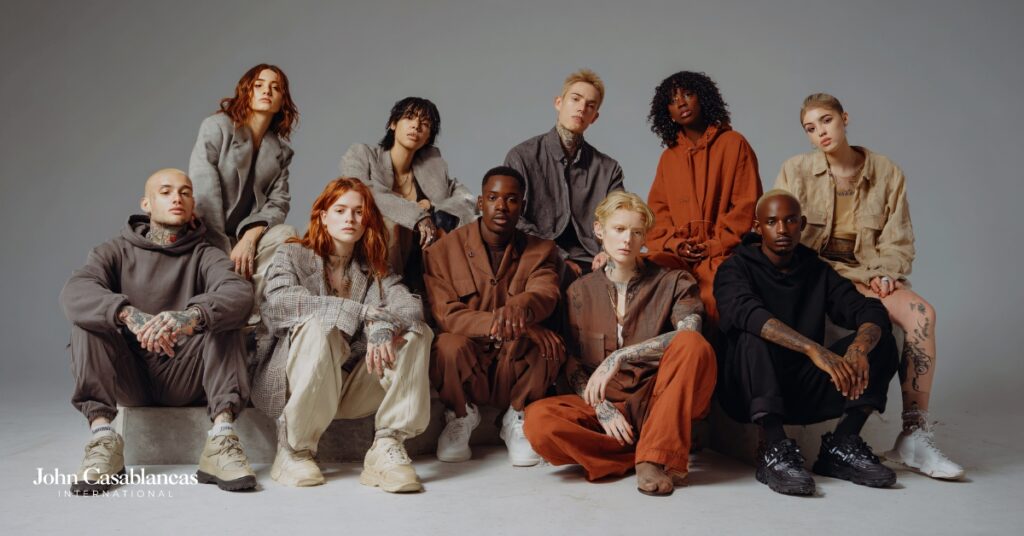
When it comes to the high-stakes world of fashion and advertising, the terms commercial vs. editorial modeling are used as the primary compass for a model’s career. To the casual observer, a photograph of a model is simply a photograph. However, in the real world of the industry, these two categories represent entirely different business models, aesthetic philosophies, and career trajectories.
Understanding the distinction is vital for aspiring models, photographers, and brand managers alike. One sells the dream of who we are, while the other sells the dream of who we might become.
The Commercial Model as The Mirror of Reality
The primary objective of commercial modeling is simple and transactional, since it’s just selling a product or a service to a mass audience. Because the goal is to appeal to the everyman or everywoman, the models have to be relatable.
The Aesthetic of Relatability
In commercial modeling, the “girl or boy next door” look reigns supreme. Brands like Target, Amazon, or Coca-Cola want someone with a warm, approachable smile, healthy skin, and clear eyes.
Unlike editorial modeling, commercial work is highly inclusive. Because products are sold to people of all ages, sizes, and backgrounds, the industry requires a diverse range of models. Physical height and weight requirements are much more relaxed here, and what matters most is the model’s ability to look like a best-case scenario version of the consumer.
The Editorial Model as The Muse of Artistry
If commercial modeling is a conversation, editorial modeling is a performance. Often referred to as high fashion, editorial work is found in the pages of prestigious magazines like Vogue, Harper’s Bazaar, or V Magazine. Here, the model is a canvas for a photographer’s vision, a stylist’s creativity, or a designer’s narrative.
The Aesthetic of the Extraordinary
Editorial models are defined by their uniqueness or edge. While commercial models are conventionally beautiful, editorial models often have features that might be considered unconventional or even strange in a small-town setting. They might have wide-set eyes, prominent ears, or an extremely angular bone structure.
The physical requirements for editorial work remain the strictest in the industry. For women, the industry standard is typically between 5’9” and 6’0”, with very specific hip and waist measurements to fit sample size clothing. For men, the height is usually 6’0” to 6’3” with a lean, athletic build.
In an editorial shoot, the product is often secondary to the story. A model might be asked to pose in a way that feels awkward, static, or even haunting. There is rarely a direct smile into the camera, and instead, the model uses their body and expression to evoke a mood.
Key Differences in the Real World
To truly understand how these two worlds operate, we must look at the technical and professional nuances that happen behind the scenes.
Posing and Movement
For commercial modeling, the movements are natural and fluid. A commercial model needs to know how to laugh convincingly, how to look excited about a new skincare bottle, or how to pose like they are in the middle of a jog.
On the other hand, for editorial modeling, the movements are often architectural. Models must understand the shapes their limbs create in relation to the camera. It requires a deep understanding of light and shadow, as editorial photography often uses dramatic, harsh lighting that requires the model to hold difficult positions for long periods.
This is why training matters so much early on. A commercial model who has never practiced natural, reactive expression on camera will freeze. An editorial model who has never studied body geometry will default to safe, forgettable poses. The difference between a model who books and one who doesn’t is almost always preparation, not looks.
The Role of the Client
Commercial clients are generally corporations and household brands. Their main concern is brand safety and mass appeal. They want a model who looks trustworthy and fits the demographic of their buyer.
Editorial clients are creative directors, legendary photographers, and high-fashion designers. They want a muse. They are looking for someone who can transform into a character and bring a specific, often polarizing, artistic vision to life.
Which Path Is Right?
For those entering the industry, the commercial vs. editorial modeling choice is often dictated by genetics and temperament.
If you are 5’5”, athletic, and have a smile that lights up a room, you are a commercial powerhouse. Your world will involve high-energy sets, lots of personality, and a diverse range of clients.
If you are 5’10”, have a unique look that people can’t stop staring at, and enjoy the idea of being a piece of living art, your path is editorial. Your experience will involve high-fashion go-sees, travel to fashion capitals, and working with creative visionaries.
Launch Your Career With John Casablancas International
Navigating the nuances of commercial vs. editorial modeling requires professional guidance and industry-standard training. Whether you possess the relatable charm of a commercial star or the avant-garde edge of an editorial muse, John Casablancas International is dedicated to helping you find your place in the spotlight.
As a global leader in talent development, we provide the tools, confidence, and connections necessary to thrive in the real-world modeling industry. Ready to turn your potential into a professional career? Join John Casablancas International and start your journey today.
Rebecca Lord is the Chief Marketing Officer at John Casablancas Modeling and Career Centers, where she leads strategic marketing to grow brand visibility. With over a decade in copywriting, social media, and ROI-driven campaigns – plus 14 years as a freelance copywriter and designer – she specializes in messaging that resonates and delivers results. She’s based in Greater St. Louis.